Lenvatinib intermediates are key building blocks used in the synthesis of lenvatinib, a multi-targeted tyrosine kinase inhibitor widely applied in oncology treatment. These intermediates typically involve quinoline derivatives, substituted anilines, and urea-linked structures, enabling the construction of complex molecular frameworks. Through stepwise reactions such as coupling, cyclization, and functional group modification, they support efficient API development and process optimization. Continuous improvements in synthetic routes have enhanced overall yield and industrial feasibility, making these intermediates suitable for both laboratory research and large-scale pharmaceutical manufacturing.
Lenvatinib Intermediates Characteristics
Structural Precision: Well-defined molecular structures support accurate synthesis pathways and enable efficient construction of lenvatinib core frameworks.
Process Adaptability: Compatible with key synthetic steps such as coupling and cyclization, allowing flexible process development and optimization.
Scalable Feasibility: Suitable for scale-up with consistent performance, facilitating smooth transition from laboratory research to industrial production.
| Name | CAS Number | Molecular Formula | Molecular Weight(g/mol) | Chemical Structure |
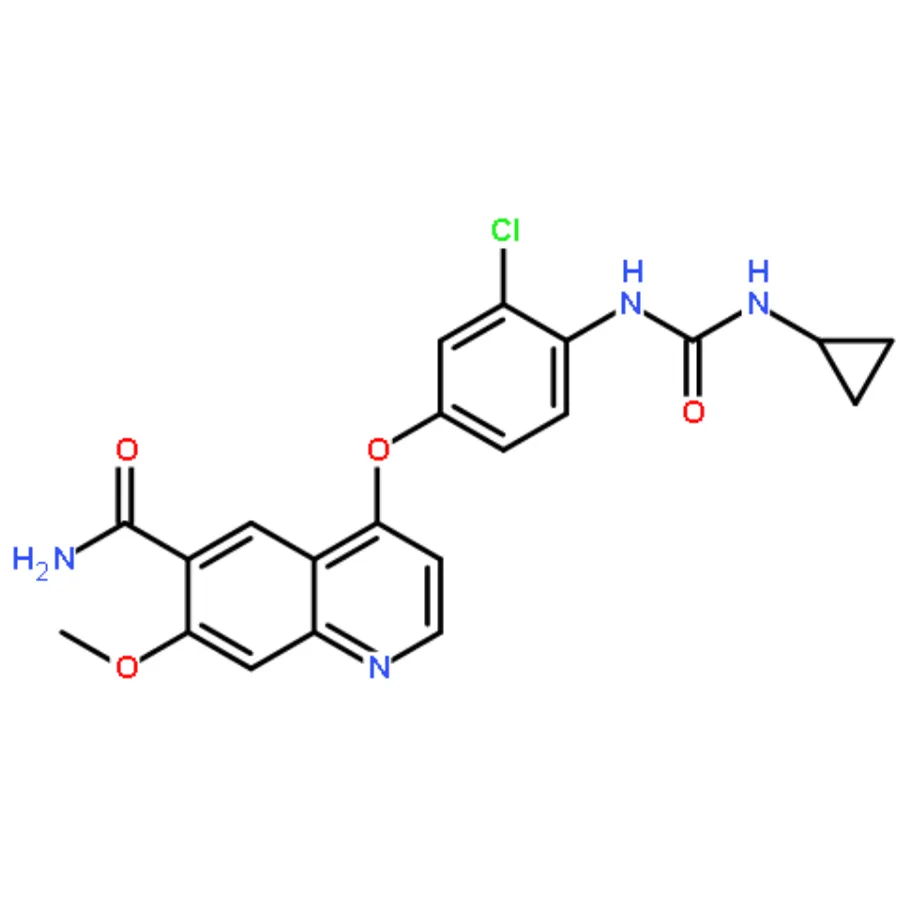
| Lenvatinib | 417716-92-8 | C₂₁H₁₉ClN₄O₄ | 426.85 | ![]() |
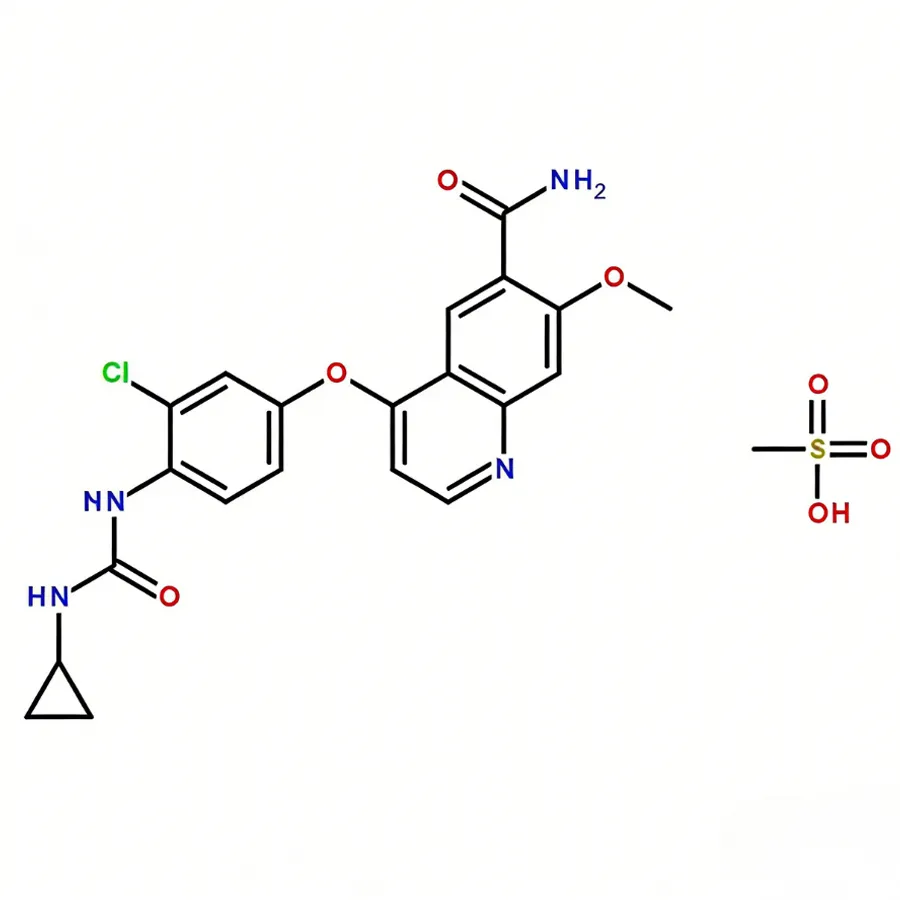
| Lenvatinib Mesylate | 857890-39-2 | C₂₂H₂₃ClN₄O₇S | 522.96 | ![]() |
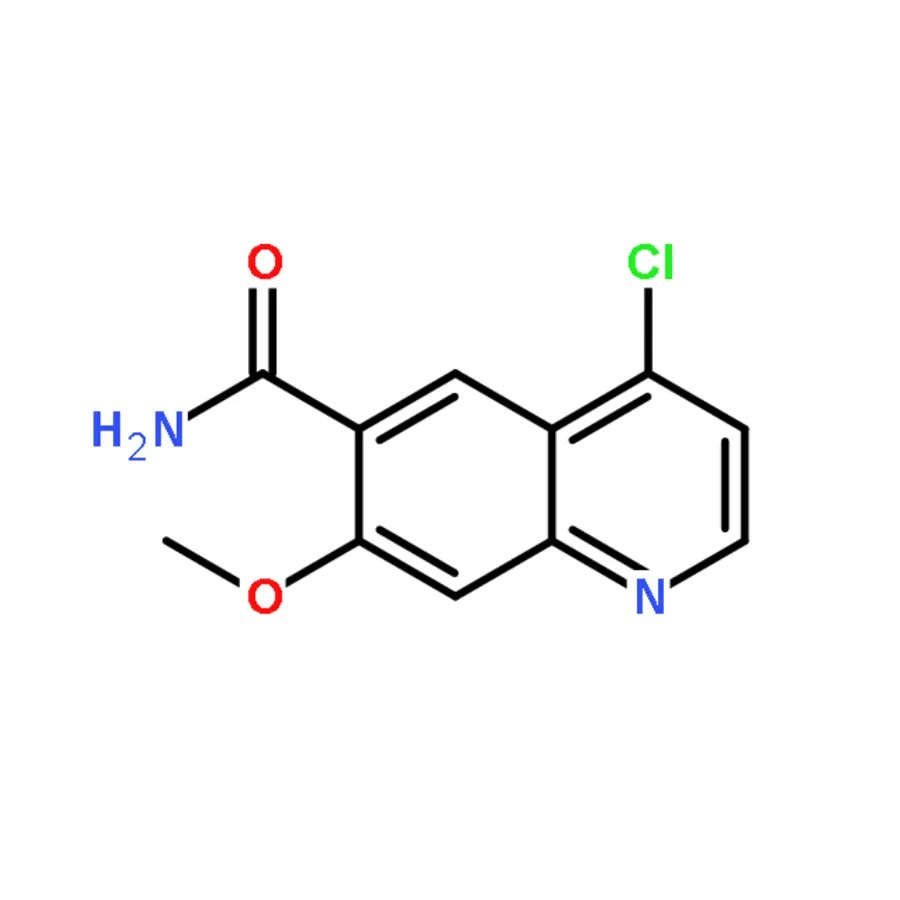
| 4-Chloro-7-methoxyquinoline-6-carboxamide | 328543-09-5 | C₁₁H₉ClN₂O₂ | 236.65 | ![]() |
Lenvatinib is a small‑molecule multi‑target tyrosine kinase inhibitor that exerts antitumor activity primarily by binding to and blocking the ATP‑binding sites of several receptor tyrosine kinases involved in tumor angiogenesis and cell proliferation. It inhibits vascular endothelial growth factor receptors (VEGFR1‑3), fibroblast growth factor receptors (FGFR1‑4), platelet‑derived growth factor receptor α (PDGFRα), KIT, and RET, thereby preventing ligand‑induced receptor phosphorylation and downstream signal transduction through pathways such as Ras/MAPK and PI3K/AKT. This inhibition suppresses endothelial cell proliferation, tumor neovascularization and cancer cell survival. Intermediates formed during metabolism (e.g., via CYP3A‑mediated oxidative steps) have roles in modulating bioavailability and pharmacokinetic profiles but retain the core kinase inhibitory scaffold essential for target engagement in cancer cells.
Lenvatinib for Radioactive Iodine‑Refractory Differentiated Thyroid Cancer
As the active small molecule derived from its intermediate, lenvatinib treats advanced thyroid cancer by inhibiting multiple receptor tyrosine kinases (VEGFR, FGFR, RET, PDGFR), blocking angiogenesis and tumor proliferation.
Lenvatinib for Unresectable Advanced Hepatocellular Carcinoma (HCC)
The lenvatinib precursor is used to produce lenvatinib, a multi‑targeted kinase inhibitor that suppresses VEGF/FGF signaling, reducing tumor vascular growth and slowing liver cancer progression.
Lenvatinib Combination in Advanced Renal Cell Carcinoma (RCC)
Derived from the same intermediate, lenvatinib combined with agents like everolimus inhibits RTKs to block blood vessel formation and cancer cell growth in advanced kidney cancer.
B608, #25 Shenbin Rd, Minhang District, Shanghai, China