Heterocyclic boronic acids are advanced intermediates featuring a boron functional group attached to a nitrogen, oxygen, or sulfur-containing ring. This unique architecture combines the reliable coupling capability of boronic acids with the diverse reactivity and pharmacophore properties of heterocycles. They are indispensable in Suzuki-Miyaura cross-couplings for constructing complex drug-like molecules, agrochemicals, and organic electronic materials. We provide a comprehensive portfolio of heterocyclic boronic acids, including pyridines, pyrimidines, furans, and thiophenes, all characterized by high purity and batch-to-batch consistency. Our team also offers custom synthesis to deliver tailored solutions for your most challenging projects.
| Name | CAS Number | Molecular Formula | Chemical Structure |
| Pyridine-4-boronic acid (4-Pyridinylboronic acid) | 1692-15-5 | C₅H₆BNO₂ | ![]() |
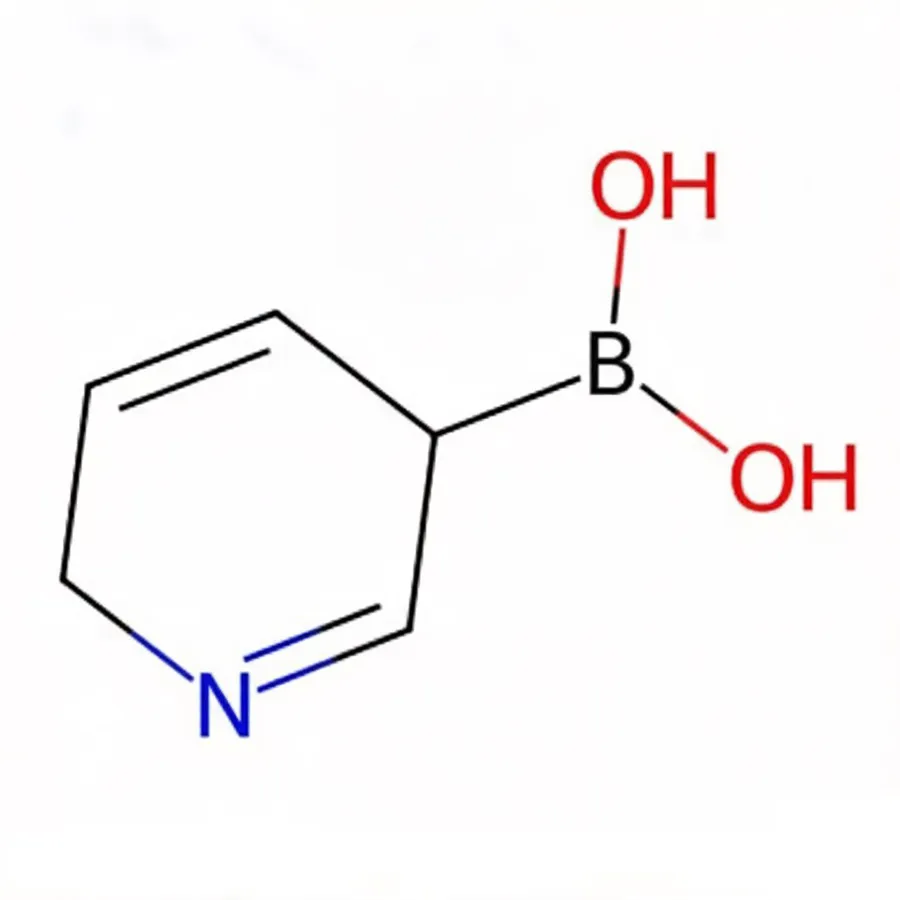
| Pyridine-3-boronic acid (3-Pyridylboronic acid) | 1692-25-7 | C₅H₆BNO₂ | ![]() |
| 2-Methoxypyridine-3-boronic acid | 163105-90-6 | C₆H₈BNO₃ | ![]() |
| Furan-2-boronic acid (2-Furylboronic acid) | 13331-23-2 | C₄H₅BO₃ | ![]() |
| Thiophene-2-boronic acid (2-Thienylboronic acid) | 6165-68-0 | C₄H₅BO₂S | ![]() |
Heterocyclic boronic acids operate via the core Suzuki-Miyaura cross-coupling mechanism, where a palladium catalyst facilitates the transfer of the heterocyclic group to an organohalide, forming a crucial carbon-carbon bond. Their key advantage lies in the heterocycle itself—incorporating nitrogen, oxygen, or sulfur atoms alters the electronic properties and geometry of the molecule. This enhances reactivity, improves solubility, and directly integrates privileged pharmacophores or functional handles into the final coupled product. This makes them superior building blocks for efficiently constructing complex, drug-like nitrogen-rich heterocycles, advanced materials, and bioactive molecules with precise control over the final structure's properties.
Heterocyclic Boronic Acids
Heterocyclic boronic acids are essential precursors for FDA-approved proteasome inhibitors like bortezomib and ixazomib, used to treat multiple myeloma. Their unique boron chemistry enables reversible covalent binding to the proteasome's active site, providing targeted anticancer activity.
Heterocyclic Boronic Acids
Heterocyclic boronic acids serve as key building blocks in Suzuki-Miyaura cross-coupling reactions, a cornerstone of modern drug discovery. This versatile reaction efficiently constructs complex biaryl and heterocyclic scaffolds found in numerous pharmaceuticals, from kinase inhibitors to antiviral agents.
Heterocyclic Boronic Acids
Heterocyclic boronic acids are crucial intermediates for developing tumor-activated prodrugs. Their boronate esters can be selectively oxidized by elevated reactive oxygen species (ROS) in the tumor microenvironment, releasing active cytotoxic agents specifically at the disease site.
B608, #25 Shenbin Rd, Minhang District, Shanghai, China